YUNNAN · PEOPLE & CRAFT
Yunnan, through the hands that make it
From Bai tie-dye in Dali to a Naxi shoulder cape, meet the cloth, the craft and the people who use them today.
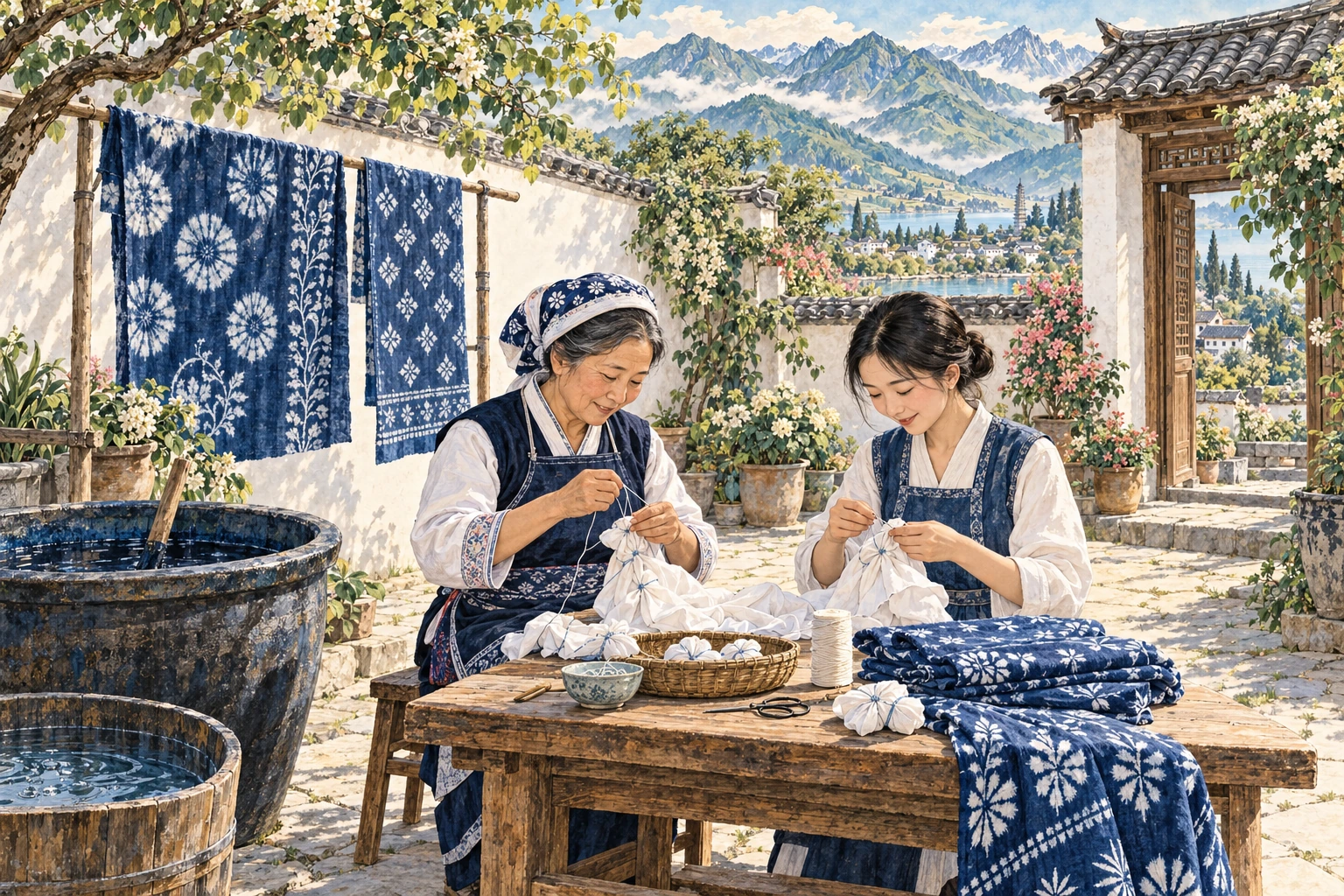
Dali: a pattern begins in the hands
In Zhoucheng, Dali, watch Bai tie-dye before the cloth reaches the dye vat. Folding and stitching gather it into tight bundles; opening them after dyeing reveals pale patterns where the thread protected the fabric. Blue and white are characteristic colours. Notice the soft changes at their edges. At a workshop, ask which dye you are using and how to wash the finished piece. Learning to tie one small bundle can make the craft more memorable than a photograph of a whole wall of cloth.
Lijiang: start with one garment and its story
One object offers a useful introduction to Naxi clothing. Shanghai Museum holds a modern-era seven-star sheepskin shoulder cape from the Yunnan side of Lugu Lake. Seven embroidered circles decorate its back, associated with the expression 'wearing the stars and moon'. Material, stitching and pattern become things you can look for. Locally, ask a guide or the owner where a particular garment comes from and when it is worn. Region, age and occasion are good questions to explore, giving each photograph a more specific story.
Dongba: follow the writing into another tradition
When you see picture-like writing in Lijiang, look for the name Dongba. It connects to Naxi religious culture and its priestly tradition; manuscripts use pictographic writing to record scriptures. Ancient Naxi Dongba manuscripts entered UNESCO's Memory of the World Register in 2003. Writing and clothing each have their own histories to explore. In an exhibition, choose one explained character: who wrote it, how is it read, and what is it used for? Its lines become more interesting once you know a little of their purpose.
Begin the encounter with a question
Clothing can open a conversation. If you admire a jacket, ask whether its owner made it; for a portrait, try '可以给您拍张照片吗?' — 'May I take your photo?' — and wait for agreement. When renting clothing, ask its name, how to wear it and what the price includes. Return it as the shop requests. Leave room for ordinary daily choices too: people may wear traditional pieces or whatever modern clothes they enjoy. The rewarding souvenir is knowing a little more about a particular person and their work.