SUZHOU · ART OF LOOKING
A garden you read one view at a time
In Suzhou, a window, a turn and a reflection can make a small garden feel unexpectedly expansive.
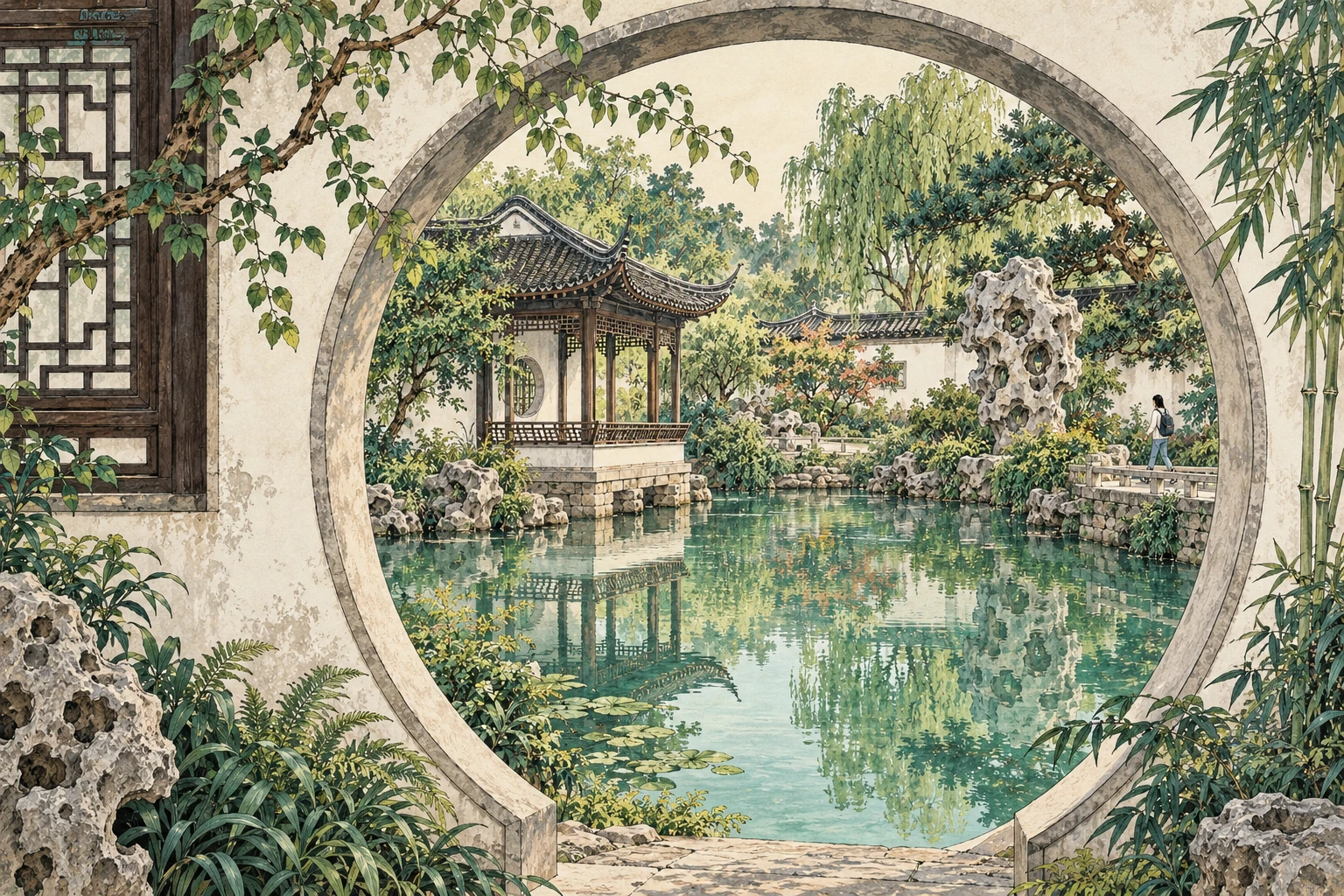
A landscape close to home
Suzhou's classical gardens bring a landscape into the space of a residence. Water, rocks, plants and buildings work together, rather than forming separate attractions to tick off. UNESCO's World Heritage listing includes nine gardens in and around the historic city. That is a starting point, not a requirement to see all nine. Choose one and give it time. The interesting question is how a limited space can suggest somewhere much larger. Look at what occupies the foreground, what appears behind it and what remains partly concealed until you take a few more steps.
The wall is part of the view
A wall does not always end the scene. In Suzhou gardens, patterned lattice openings can reveal fragments of plants, rocks or buildings beyond it. The local history office describes how these windows divide space while keeping a visual connection across it. Try standing still at one opening, then moving a little to either side. The pattern stays in place while the relationship between the things beyond it changes. This is a simple way to experience the design without memorising specialist terms: you are watching a view being composed by where you stand.
Let water do some of the drawing
At a pond, look at the image below the waterline as well as the objects above it. A roof, a stone and a branch may return as softer shapes in the reflection. Wind and light can change the composition without any alteration to the buildings. This is an invitation to look, rather than a promise that every visit will offer a perfect photograph. The season, weather, water surface and other visitors all belong to the scene you meet. Even a short pause can reveal why a garden rewards attention more than a quick circuit of its paths.
Walk it twice, differently
On a first walk, let the path lead you. On a second, return to three places: an opening, a corner and a seat beside water. Compare the view when approaching, standing inside it and looking back. You may find that a place which seemed like a passage becomes your favourite part of the garden. This small exercise works without a camera and without knowing the meaning of every inscription. These gardens are cared-for historic places, so use the visitor paths and follow local signs. Let the design change your pace for a little while.