FOOD · MORNING RITUALS
China is worth getting up for
Steam, sesame and a city waking up: breakfast is a small journey of its own.
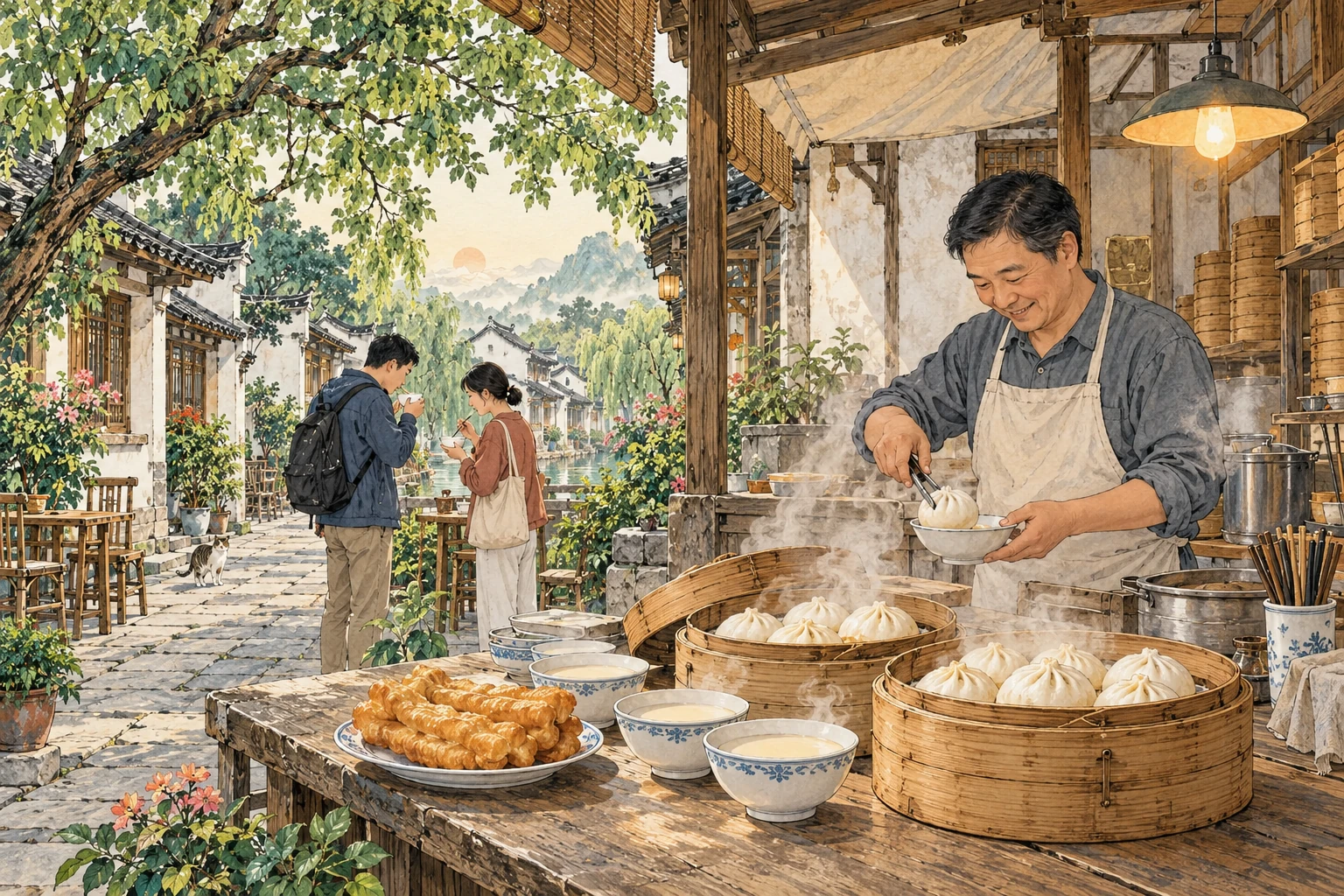
Follow the morning, one neighbourhood at a time
Breakfast is a useful way to make a large, unfamiliar city feel closer. A short walk becomes a sequence of things you can read: a stack of steamers, dough being shaped, a line that moves quickly, a shop that makes just a few items. China has many breakfast traditions, and a single street will not stand for all of them. Start with the neighbourhood where you are staying. Look at what is actually being made that morning, choose one thing that interests you and leave time to sit or stand with it before moving on.
Shanghai: four names to recognise
In Shanghai, one classic breakfast grouping brings together dabing, a flatbread; youtiao, fried dough sticks; cifantuan, a sticky-rice roll; and doujiang, soy milk. Together they are commonly called the Four Heavenly Kings. These names give you a little vocabulary for a menu or a counter, rather than a compulsory four-part order. Try noticing the contrasts: crisp dough against soft rice, a drink alongside something you can carry. Modern bakeries, cafés and other breakfast choices belong to the city too. The pleasure is finding one local combination you would happily eat again.
Wuhan: a word for having breakfast
In Wuhan, you may meet the word guozao, the local expression for having breakfast. One dish associated with it is reganmian: hot-dry noodles dressed with sesame paste. Here, dry distinguishes the dish from a bowl of noodle soup; it does not mean cold. Learning the name makes an unfamiliar counter easier to approach and gives you something specific to notice. What does the cook add? How do customers carry or eat their bowls? Treat this as a glimpse of one city's morning, and let the next city introduce a different breakfast vocabulary.
Order a small beginning
You do not need a long list of famous dishes to enjoy breakfast. Start with a modest order, ask what a filling or topping contains and point to the item if pronunciation gets in the way. A photograph of a dish can help, but let the shop's actual menu guide the order. Busy morning counters may have a simple rhythm: watch where customers order, collect food and return bowls before joining in. Afterwards, save the Chinese name of the item you liked. It turns a passing meal into a useful word for the rest of your trip.