CLOTHING · CRAFT · LIVING CULTURE
A world of stories, stitched into a sleeve
Look closely at silver, embroidery and woven cloth to discover the people and places behind China's diverse dress traditions.
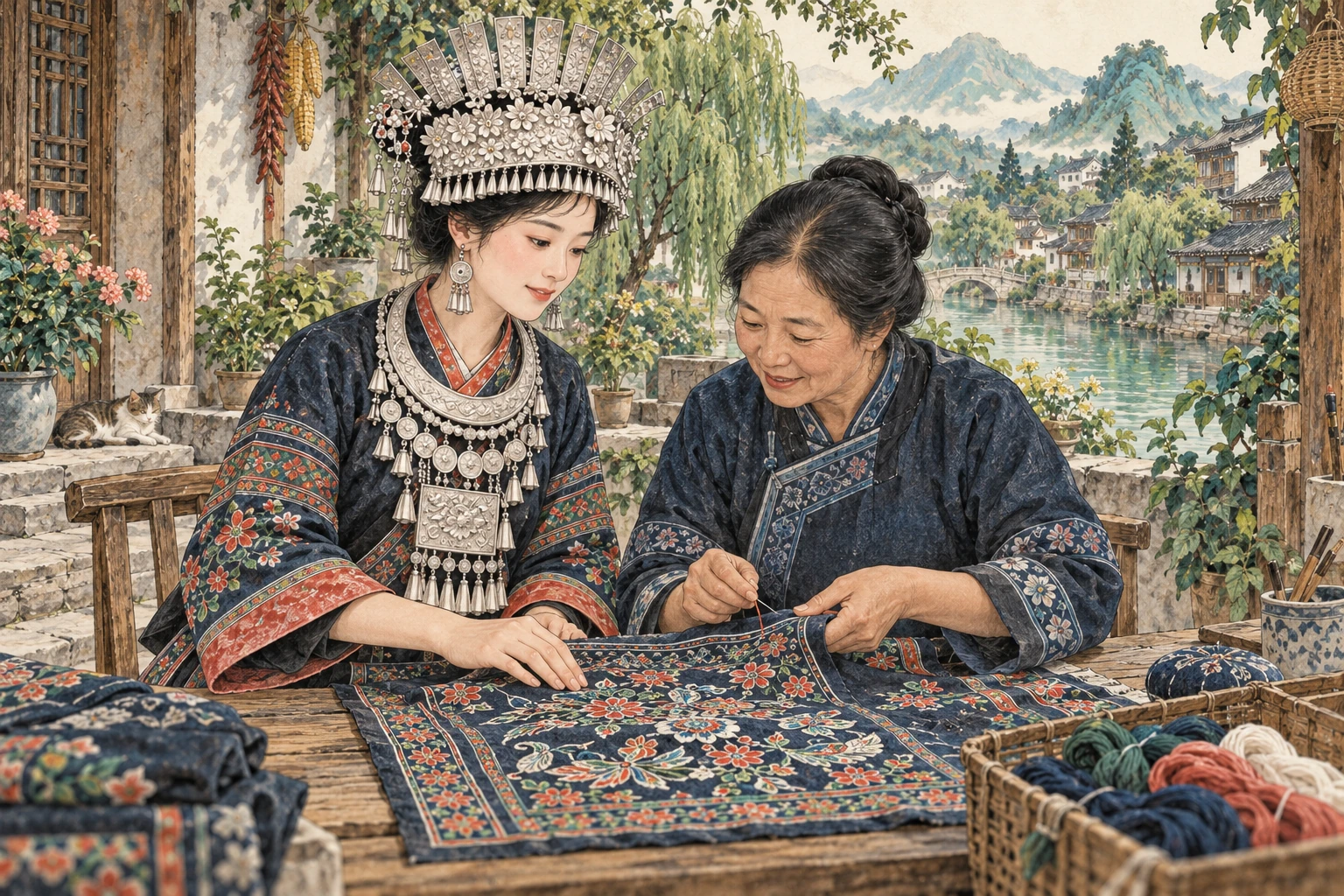
Start with a person, then ask about the place
The figure in this illustration takes inspiration from Miao festive dress in Guizhou. It is one doorway into a much wider subject. There is no single outfit that represents every ethnic community in China, or even every family within one community. Place, occasion and the wearer's own choices matter. Museum labels offer a useful habit: look for the specific community, locality and date. The Met, for example, identifies a different early twentieth-century headdress as Yao, made of silver and cotton. Similar materials do not make two garments the same tradition. When travelling, a good first question is simply: what is this garment called here?
Guizhou: follow a thread, then a glint of silver
Begin with one detail rather than the whole silhouette: an embroidered cuff, a seam or a moving pendant. The V&A documents a Miao women's festive jacket from Huangping, Guizhou, made with silk damask and embroidered cotton. Bowers Museum holds a twentieth-century festival headdress from Danzhai, Guizhou, with dragon, animal and human motifs, in silver and feathers. Its record places elaborate silver adornment in celebratory use. These are specific objects, not a dress code for everyone today. Ask which details are embroidered, woven or attached, and when this particular outfit is worn. A celebration portrait cannot tell you what someone wears to work the next morning.
Hainan: look at how the cloth is made
Now change the question from what catches the light to what makes the fabric. UNESCO describes Li textile traditions in Hainan through spinning, dyeing, weaving and embroidery, used for clothing and everyday objects. Its account also follows skills being passed on, including through education and a growing involvement of men. This is culture being practised and learned in the present. In a workshop, notice the order of the work: fibre becomes thread, thread becomes cloth, and a surface gains a pattern. Ask the maker which stage you are seeing. That conversation can reveal more than a quick attempt to identify an ethnic group from a photograph.
Let a photograph begin with a conversation
If you would like a portrait, ask the person before taking it and accept a no. Ask separately before sharing it publicly. A shop or workshop may invite visitors to try clothing; let the host explain the garment's name, occasion and how to handle it. Check the price and what a rental or photo session includes, and avoid touching delicate embroidery or putting on ornaments without permission. A rented outfit is an introduction, not proof that you understand the whole culture. You might leave with something more lasting than a pose: the maker's name, one newly learned word and a detail whose story you can now tell accurately.