CITY SKYLINES · AFTER DARK
Three cities, three ways to light the night
Shanghai, Hong Kong and Shenzhen: learn to read the skyline before the lights begin.
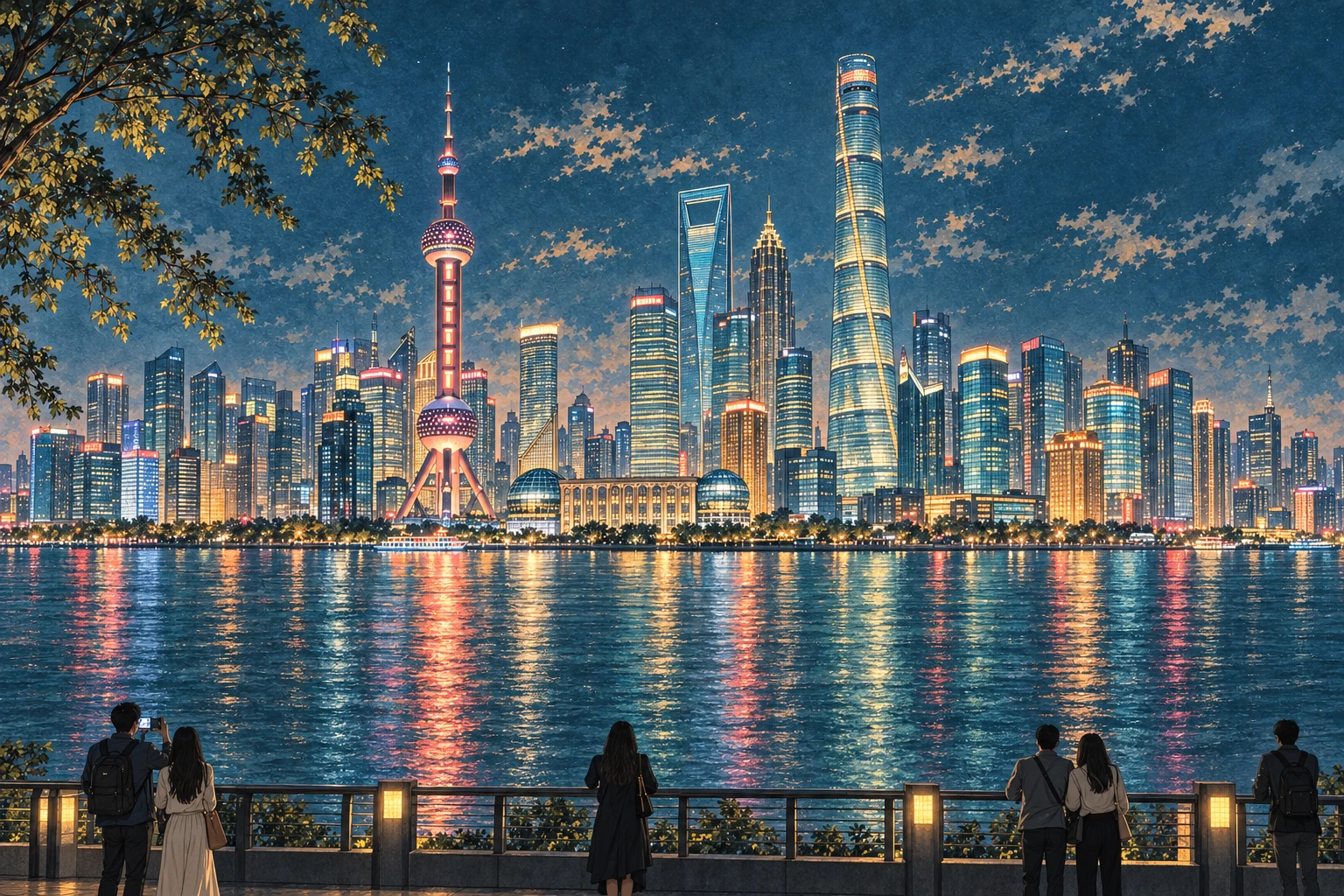
Shanghai: a conversation across the river
Begin on the Bund and let your eyes cross the Huangpu River. The Bund's historic waterfront buildings face the towers of Pudong; the Oriental Pearl stands in Lujiazui on the opposite bank. That contrast makes a useful first way to read Shanghai: the skyline has two sides, and your position changes the story. Try framing the whole river before zooming in on a favourite tower. Then turn around and look at the buildings behind you. For a visit, an ordinary illuminated evening can be as rewarding as a special event. Do not assume that the waterfront's architectural lighting means a coordinated light show is scheduled that night.
Hong Kong: the harbour is part of the stage
In Hong Kong, leave some water inside the frame. Victoria Harbour gives the towers room to be seen together, with reflections and passing vessels changing the foreground. A Symphony of Lights is a coordinated multimedia show involving buildings on both sides of the harbour. Official viewing suggestions include the Tsim Sha Tsui waterfront and Golden Bauhinia Square in Wan Chai. Choose a side for the view you want, rather than trying to collect every landmark in one evening. A photograph can flatten the distance; standing by the water restores it. Look up from the screen occasionally and notice how the outline of the city reads as one long composition.
Shenzhen: a district becomes a canvas
Around Shenzhen's Civic Center, look for the relationship between the broad foreground and the towers beyond it. Futian's programmed light shows can coordinate building facades into a larger image, so a little distance helps the separate surfaces read together. Official notices identify viewing places around Civic Center and Lianhua Hill; the exact access arrangements depend on the event. This is a different pleasure from studying a single skyscraper. Ask what happens across the whole scene: does colour move sideways, does one shape answer another, does the scale change when people enter the foreground? Watch first without recording, then decide which moment is actually worth keeping.
Build an evening around the place, not a timetable copied online
Treat a skyline and a light show as two different reasons to go out. The skyline is the arrangement of buildings, water and streets; a show is a programmed event with its own operating conditions. Check the current official notice for your travel date, including weather changes, reservations and access rules. Do not plan around an old social-media clip or assume a festival edition runs every evening. Arrive with enough time to find the waterfront or square in daylight, identify your return transport and choose a comfortable place to stand. If the show changes or does not run, you still have a city to watch as daylight leaves it.